



More than two decades after the Paris Declaration placed country ownership at the centre of development effectiveness, the principle remains under-realised in practice. In 2025, official development assistance fell by 23.1 per cent in real terms the largest annual contraction on record. Governments are facing tighter fiscal space, rising debt service obligations, and growing pressure to mobilise private capital to finance the infrastructure and services that shrinking aid budgets can no longer support. The question of who actually controls development investment is therefore no longer primarily a matter of principle. It is a matter of fiscal and institutional survival.
Country ownership is also broader than government ownership. It encompasses legislatures, regulators, communities, civil society and service users the domestic institutions that make government decisions accountable and durable. In a PPP, government is the principal public decision-maker. But genuine country ownership requires that the contract’s consequences are visible to oversight institutions, that communities affected by the investment have access to remedy, and that the arrangement survives changes of administration. This distinction matters because a government can formally hold a contract while the country has little real control over its terms.
Public–private partnerships make that question unusually concrete. A PPP places government on the public side of a long-term contractual relationship in which strategic objectives, procurement, risk allocation, payment mechanisms, performance standards and regulatory responsibilities must fit together. Where the public side lacks the capability to govern those decisions, formal government participation can coexist with substantive dependence on external advisers, financiers or sponsors.
The argument of this insight is therefore narrower than a case for PPPs. PPPs are not inherently superior to conventional public procurement, and private participation does not by itself produce better infrastructure or public services. PPPs are a useful test of whether country ownership has become institutional capacity. If governments are to act as genuine principals, the development system must build the legal authority, transaction capability, fiscal discipline and regulatory strength that allow them to do so.
1. The ownership question becomes contractual when government becomes the principal
The evolution from Paris to Accra and Busan strengthened the expectation that development should be led by countries and implemented through effective partnerships. The principle is established. The harder question is where it sits in the machinery of an investment.
Ownership is not equivalent to consultation. It is not established by the presence of a government representative on a steering committee. It becomes credible when the institution that is politically and fiscally accountable can exercise the decisions that shape the investment. A PPP exposes those decisions because the public authority sits inside the transaction. It must determine whether the project should be procured as a PPP at all; establish public-service requirements; conduct or oversee competitive procurement; evaluate affordability and value for money; negotiate contractual obligations; coordinate approvals; and maintain oversight during implementation and operations.
That is why the OECD’s Recommendation on Principles for Public Governance of PPPs connects the PPP decision to public governance, fiscal affordability, transparency, institutional responsibility and risk management. Table 1 shows where formal participation and operational ownership diverge.
That is why the OECD Recommendation on Principles for Public Governance of Public-Private Partnerships connects the PPP decision to public governance, fiscal affordability, transparency, institutional responsibility and risk management. Table 1 shows where formal participation and operational ownership diverge.
Table 1: The ownership chain in a PPP
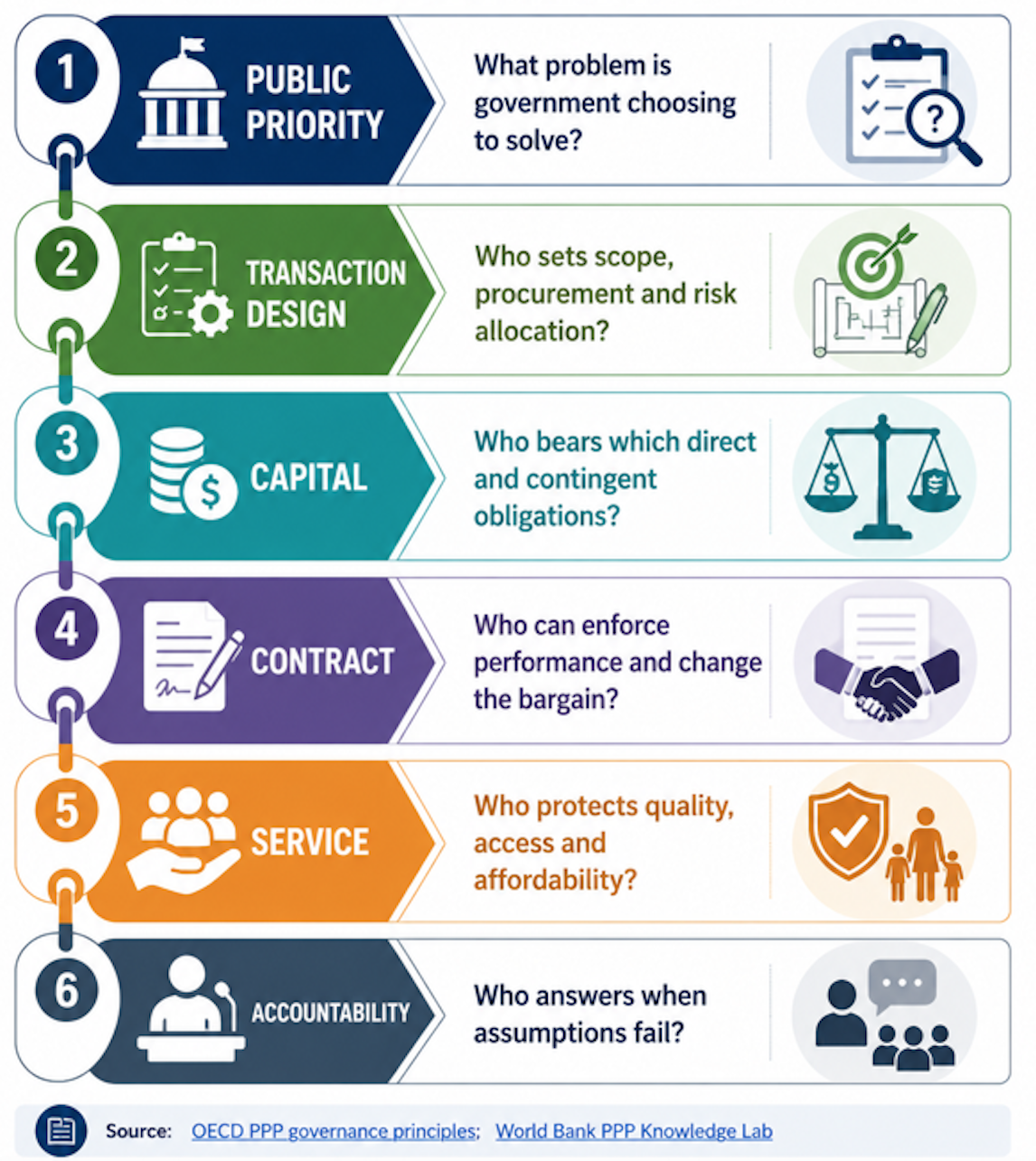
Figure 1. The ownership chain in a PPP. The Ownership has to survive the whole chain. A government that controls the policy statement but not the transaction is not yet the principal.
2. Weak public-side capability does not remove risk; it changes where the risk lands
Risk allocation is only credible when the public side can test it
The economic case for a PPP depends on incentives, information and the allocation of risk to the party best able to manage it. Engel, Fischer and Galetovic (2010) examine PPPs against public provision, while Iossa and Martimort (2015) analyse how long-term PPP agreements balance incentive strength against the flexibility governments need when circumstances change. Both studies treat risk allocation as a contractual design problem, not a financing solution.
For government, this means risk transfer cannot be established by a clause alone. Construction risk may sit with a private contractor while demand risk remains partly public. A government may avoid routine operating expenditure but retain obligations through availability payments, guarantees or termination provisions. Currency mismatch can create further pressure where revenues and debt service sit in different currencies. The relevant question is not simply how much risk has been transferred, but which risks remain public, under what trigger, and whether the state can meet them in the downside case.
What the evidence from sub-Saharan Africa shows
A well-documented case from the World Bank’s Analysis of Independent Power Projects in Africa illustrates the consequences of entering a PPP without adequate public-side capability. Tanzania’s Independent Power Tanzania Limited (IPTL) contract was negotiated quickly and without competitive procurement in the mid-1990s. No sector regulator was in place at the time of signing. The government lacked the transaction capability to interrogate the financial model or the terms of the power purchase agreement.
The result was a power purchase agreement that the World Bank analysis identifies as the most expensive in Tanzania’s power sector costing approximately six times more per unit than the Songas project, which was competitively procured with World Bank involvement. IPTL generated an estimated USD 200 million in government liabilities from fuel cost disputes and contractual complications. The Tanzanian state remained legally accountable for the contract’s consequences while lacking the regulatory and institutional tools to govern it effectively.
Three capability gaps drove the outcome: no competitive procurement discipline, no independent regulatory framework, and no public-side transaction expertise capable of interrogating the terms before signing. The lesson is not that PPPs in sub-Saharan Africa fail. Songas, procured competitively with adequate public-side support, performed significantly better. The lesson is that the same financing model produces profoundly different outcomes depending on the institutional architecture on the public side.
Renegotiation and fiscal transparency
Long-term infrastructure contracts cannot specify every future contingency. Renegotiation can be legitimate. The governance risk arises when the public authority enters renegotiation with weaker information or bargaining capacity than its private counterparty. Sarmento and Renneboog (2016) examine how PPP financing structures and contract terms interact with renegotiation outcomes, reinforcing the point that the contract cannot be separated from the institutional environment in which it is governed.
A government cannot exercise meaningful ownership over a long-term investment if the finance ministry cannot see its full fiscal profile. IMF research on PPP fiscal risks and World Bank PPP guidance both treat fiscal commitments and contingent liability management as integral to PPP appraisal not as a post-signing administrative matter.
Table 2: Governance weakness and ownership consequences
3. The donor’s role has to change if country ownership is to mean anything
The answer is not to withdraw external support until every government has perfect PPP capability. The more useful shift is from external substitution to institutional enablement. In a PPP, donors and DFIs have instruments that can address constraints the private market will not solve on its own.
Project-preparation support can fund feasibility, legal and financial work. Guarantees can address defined political or credit risks. Viability-gap support can help a socially valuable project whose commercial revenues are insufficient. Blended finance can absorb a targeted layer of risk where the effect is additional and demonstrably catalytic. Institutional technical assistance can strengthen the public-side institution that will procure, regulate and manage the asset. The distinction is between financing a government’s transaction and running the transaction for it. The first can strengthen ownership. The second reproduces dependence.
Table 3: External instruments, catalytic roles and substitution risks
Country ownership is not a zero-sum contest between government and business. Investors need a counterpart that can make decisions, honour contractual processes, regulate consistently and manage political transitions. A stronger public principal does not mean a weaker private partner. The objective is a public authority strong enough to set the rules and a private partner strong enough to deliver within them.
Country ownership is therefore not a zero-sum contest between government and business. The objective is a public authority strong enough to set the rules and a private partner strong enough to deliver within them.
4. A government should pass an ownership test before it passes a PPP test
The following framework translates the argument into five decision gates. All five must be assessed before procurement begins. Where a gate is not passed, the assessment produces one of four outcomes: Proceed, Strengthen, Restructure, or Reject. A project should not progress to procurement or financial close where a critical gate has failed without a funded and time-bound remediation plan.
The Pacepoint Country Ownership PPP Readiness Test
A government should not be treated as the principal merely because it is the contracting authority. It should be able to exercise the principal’s decisions throughout the transaction and the operating life of the contract.
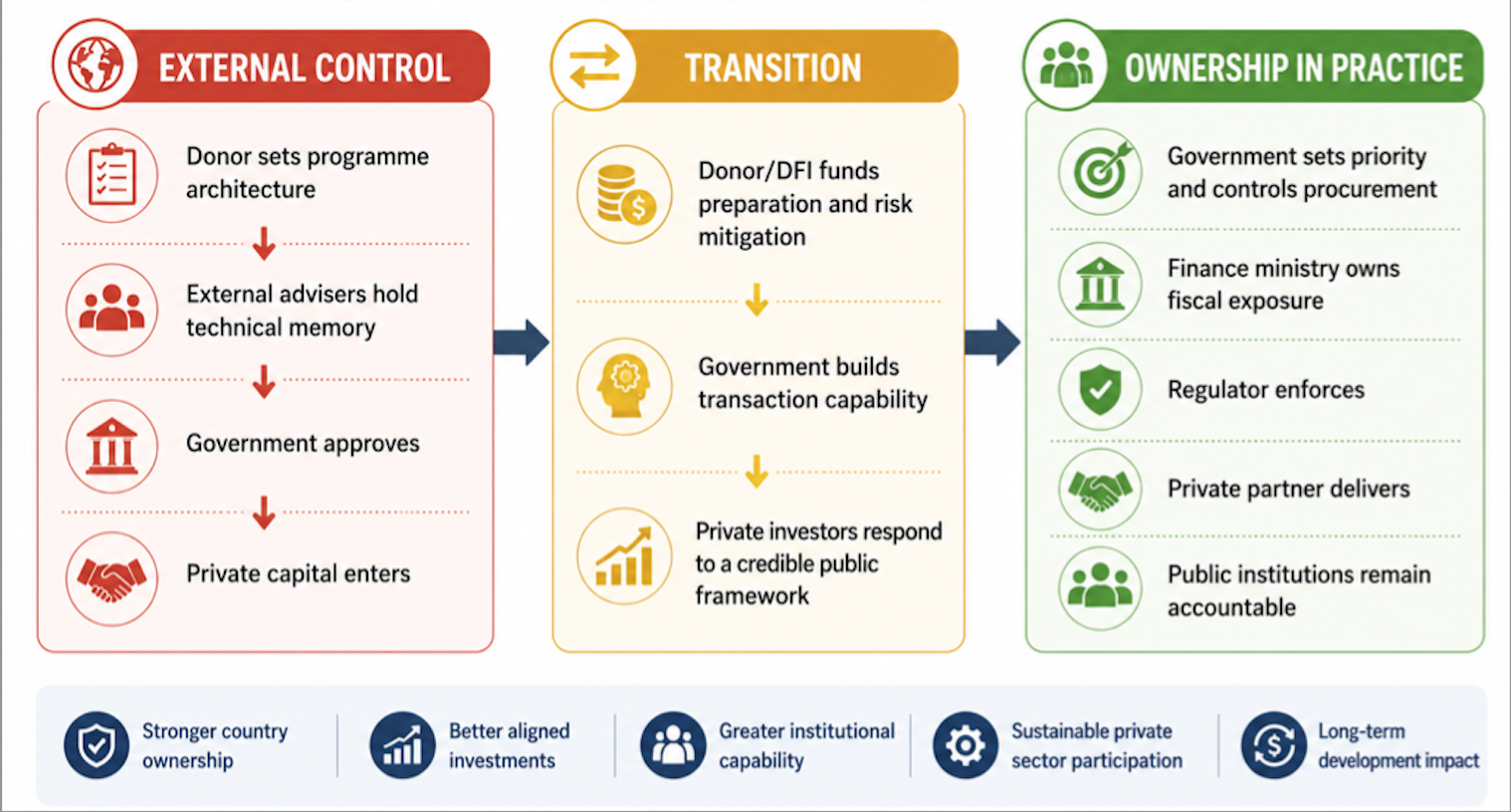
Figure 2. From donor control to country-led investment
This is not a recommendation to use PPPs more often. It is a recommendation to make the choice of delivery model more honest. If a government lacks the capacity to govern a PPP, the answer may be institutional strengthening first, conventional procurement, a different financing structure, or no project at all. A PPP should not be used to manufacture the appearance of private-sector participation where the underlying public-side architecture is not ready.
5. What this means for the institutions that approve, finance and govern PPPs
For finance ministries, the immediate shift is from project-by-project approval to portfolio-level visibility. A PPP pipeline is a set of long-term public commitments, not simply a list of assets seeking private capital. Fiscal-risk registers, approval gates and contract-management capability therefore need to sit alongside project preparation.
For infrastructure ministries and PPP units, the priority is not to eliminate external advice. It is to ensure that advice is contestable, documented and transferred. Government should know why the structure was chosen, which assumptions drive the financial model, which risks remain public and which contractual mechanisms will be needed when the operating environment changes. This knowledge must sit inside the institution, not with the consultants who leave after financial close.
For bilateral and multilateral institutions, the immediate action is to make capability transfer a measurable result of technical assistance. A transaction that reaches financial close but leaves no durable public-side capability has mobilised capital. It has not strengthened country ownership. Donor and DFI programmes should specify, before engagement, what institutional capability will remain in the contracting authority after external support ends.
For private investors, the immediate action is to assess the contracting authority’s institutional capacity as part of transaction due diligence. A sophisticated public counterparty is commercially valuable: it can make decisions, enforce contracts and manage political constraints. Institutional weakness in the contracting authority is a transaction risk, and it should be priced and disclosed as one.
For implementing organisations and governance reform specialists, the implication is practical: PPP capacity cannot be reduced to a manual or a workshop. It has to sit in the institution that will approve, procure, monitor, regulate and renegotiate the investment.
The ownership test is whether governments can govern the capital they mobilise
The development system does not need another declaration that country ownership matters. It needs more situations in which ownership can be observed and tested. PPPs provide one of those situations because the contract forces the issue into the open: someone must set the terms, someone must carry the fiscal consequences, someone must enforce performance and someone must answer when the original assumptions no longer hold.
The current role of donors and DFIs is therefore more important, not less. Their strongest contribution is the capability that makes a government able to act as principal: better project preparation, stronger public-side transaction teams, clearer fiscal-risk systems, credible regulation and carefully targeted risk mitigation. The objective should be to reduce the constraints that prevent government from exercising ownership — not to compensate for those constraints indefinitely.
A PPP cannot demonstrate country ownership when the state signs the agreement but lacks the capability to govern its consequences. The real test is whether the public institution can continue exercising authority after the advisers have left, the political administration has changed and the contract has entered operation.
If the answer is no, is the transaction really demonstrating country ownership, or simply demonstrating that someone else has become capable of making the country’s long-term decisions?

.avif)